
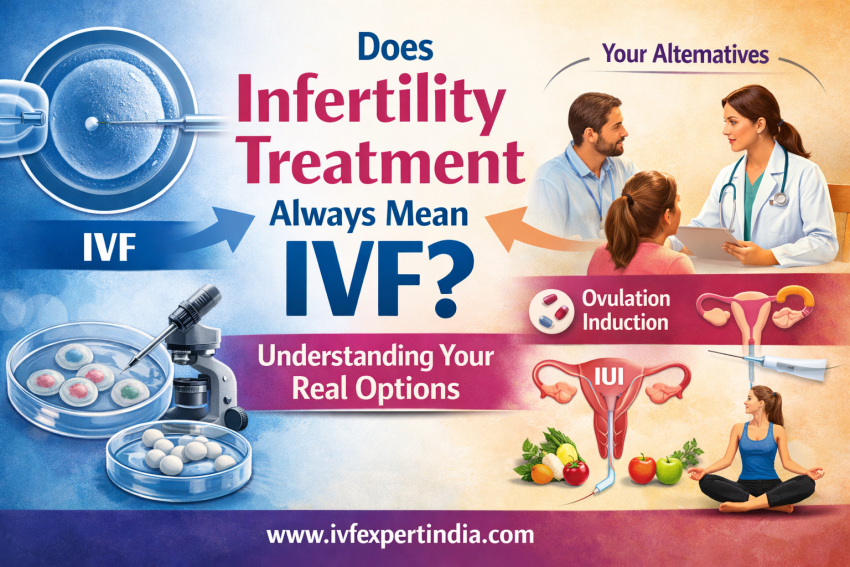
When couples struggle to conceive, one of the first assumptions they often make is that IVF is the only solution. In reality, this belief creates unnecessary stress and fear. Infertility treatment is not a one-size-fits-all approach, and many couples conceive successfully without ever undergoing IVF. Understanding the full range of available options can help you make informed, confident decisions about your fertility journey.
Understanding the Basics of Fertility Challenges
Factors that lead to infertility are varied include hormonal imbalances, ovulation, sperm-related factors, fallopian tube obstructions, lifestyles and other unexplained factors. Since the situation of each couple is different, doctors start by determining the underlying problem and then proceed with prescribing a particular solution. The emphasis of the modern infertility treatment is on individual approach, instead of jumping directly to advanced procedures.
First-Line Treatments before IVF
In the case of most couples, the non-invasive methods of treatment are the initial approach. The use of oral drugs to stimulate ovulation is useful for women who do not ovulate normally. Imbalances affecting egg production or sperm health can be corrected by hormonal therapy. Other lifestyle changes including weight control, elimination of stress, quitting smoking and better nutrition can also be of great importance in enhancing fertility. These early infertility treatment methods are sufficient to spare a natural pregnancy in many cases.
Assisted Options That Are Not IVF
If basic treatments are not successful, doctors propose less complicated assisted reproductive techniques. One of the options usually suggested is intrauterine insemination (IUI) where a healthy sperm is injected directly into the uterus during ovulation. This is usually useful with mild male infertility, unexplained infertility, or cervical problems. IUI is lesser expensive, less invasive and is emotionally easier for many couples than advanced procedures.
When IVF Becomes Necessary
IVF is normally suggested in situations where alternative methods have lesser chances of success. This could involve fallopian tube abnormality, advanced maternal age, low ovarian reserve, inflexible male infertility, or recurrent treatment failure. Even then, IVF belongs to a wider infertility treatment strategy that is developed on the basis of a thorough assessment. It is an effective alternative, though not the best fit to everybody.
Making the Right Decision
The most important step is consulting a trained fertility expert who can guide you with the available options clearly and truthfully. Knowledge about scheduling, costs, emotional preparedness, and medical requirements will enable the couples to take the most suitable path. Remember, infertility treatment is a journey that often progresses step by step, offering hope at every stage.
Conclusion
Fertility is not an issue that IVF can only solve. Most couples manage to achieve success through simple means with the right diagnosis, individual care, and professional advice. Being aware of your right choices makes you confident and optimistic.