
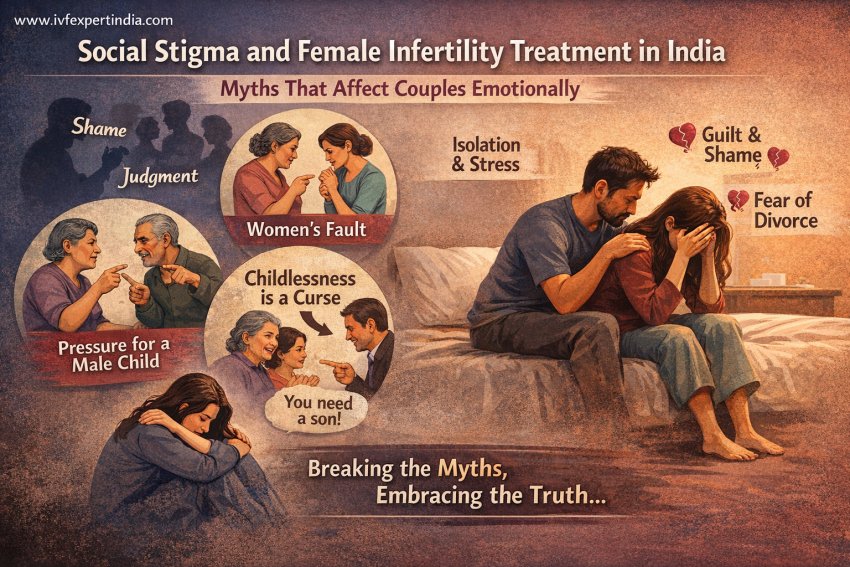
Infertility is a deeply personal medical condition, though in India it is more of a social problem than a health issue. When conception becomes difficult, women are subjected to a lot of scrutiny, judgment and emotional pressure. The existing social stigma for female infertility treatments is supported by the long-standing myths that do not only harm women but also the couples collectively and they can be very devastating, anxious, and isolating.
The Deep-Rooted Belief That Infertility Is a Woman’s Fault
One of the most damaging myths in Indian society is the belief that infertility is always linked to a woman’s body. Although medical science has clearly states that both men and women can equally be infertile, it is always the women that suffer the accusations first. This false belief creates feelings of emotional guilt, self esteem loss and social disgrace. Most women are afraid to talk openly about female infertility treatments because they fear being judged by their family members or the society.
Social Pressure, Silence, and Emotional Trauma
The pressure to conceive soon after marriage is deeply ingrained in Indian culture. Questions from relatives, unsolicited advice, and comparisons with others can be overwhelming. Couples may withdraw socially to avoid embarrassment, while women silently bear the burden of emotions. The lack of open conversation around female infertility treatment makes most of them feel that they are alone in this fight which worsen their depression and stress.
Myths That Prevent Timely Medical Help
There is a common misconception that infertility treatments are unsafe, unnatural, or against cultural values. Part of the people feel that medical intervention will mediate with destiny or divine will. Consequently, this causes couples to put off professional help and relying instead on home remedies or unverified advice. This delay may decrease the effectiveness of female infertility treatment, particularly when age-related factors are involved.
Impact on Marital Relationships and Mental Health
Social stigma does not stop with the woman—it affects the couple’s relationship as well. The marriages can be strained by the emotional distance, communication gaps, and the consistent external pressure imposed by the families and society. Women might feel that they are failing the partner or family, and men might have difficulty with the emotional support because of the expectations of the society. The emotional challenges can be overcome through assistance, counseling and the female infertility treatment that allows the couples to overcome these emotional problems collectively.
Breaking the Myths and Building Awareness
Education and awareness are keys to dismantling stigma. The issue of infertility ought not to be a medical failure, but a medical condition. The family, healthcare providers and society should promote open conversations and emotional care. When normalization and understanding of female infertility treatment are achieved, women will have the confidence to seek medical assistance with no shame or fear.
Conclusion
Social stigma and harmful myths enhance the emotional trauma of infertility. Indian society can make the fertility process more favorable to couples by disproving old myths, raising awareness, and providing compassion. Compassion, understanding, and medical guidance can transform silence into strength and isolation into hope.